


Learn English w/ Grammar Games
4.310.00 Reviews
App Specs
- Version
- 2.1
- Updated On
- License
- $6.49
- Downloads
- 50,000+
- Developer
- Gamiak
- Categories
- Educational
- Platform
- Android
Screenshots
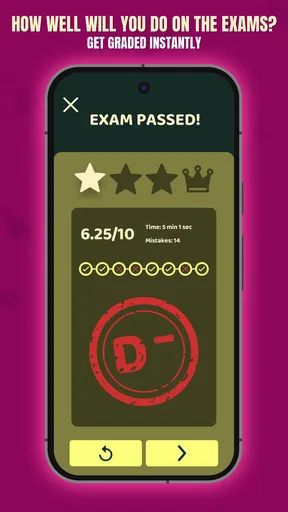
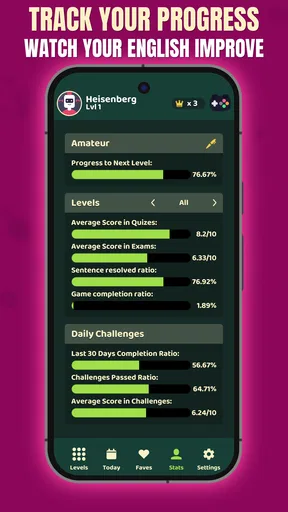
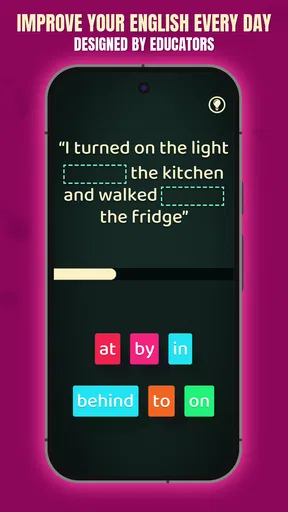
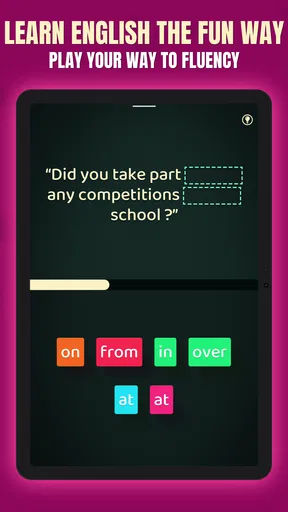
 Analysis by AppCompare
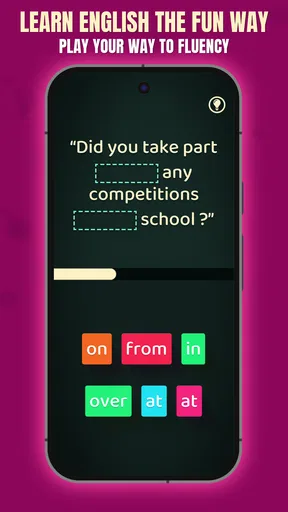
I found Learn English w/ Grammar Games most interesting when I stopped treating it like a complete English course and used it as a focused grammar practice tool. It is an educational game from Gamiak that asks me to build sentences by placing prepositions in the right position. That sounds narrow, and it is, but the narrow focus gives the experience a clear purpose: I can spend a few minutes noticing how small words change the meaning and structure of an English sentence.
The game is aimed at learners who already recognize basic English and want more confidence with grammar. It is not the kind of app I would choose for learning pronunciation, conversation, listening, or a large amount of vocabulary. Its value is more specific. I use it to reinforce sentence patterns, especially when I know a sentence feels wrong but cannot immediately explain why. That makes it useful as a supplement rather than a replacement for lessons, reading, or real conversation.
Why the first week feels appealing
The first sessions are easy to understand. I do not have to work through a complicated course map or decide which grammar topic to study before starting. The central task is direct: arrange prepositions so the sentence makes sense. Because each exercise is small, I can begin with a short practice session while waiting for a bus, taking a break, or fitting in a little study before bed.
That quick start is the strongest part of the design. A learner who feels intimidated by grammar books may find the game less demanding because the sentence gives a clear frame. Instead of producing an entire sentence from memory, I focus on choosing the relationship expressed by a preposition and placing it correctly. This reduces the pressure while still making me pay attention to grammar.
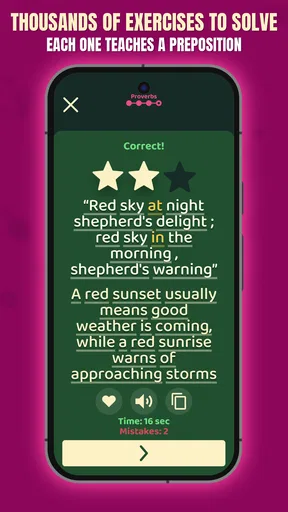
I also like the way this format exposes a common weakness among English learners. Prepositions are often short, familiar words, but they do not always translate neatly from another language. A learner may understand the main vocabulary in a sentence and still hesitate over words such as “in,” “on,” “at,” or “to.” Repeated sentence work can make those choices feel less mysterious, particularly when I pause to ask why one option works and another does not.
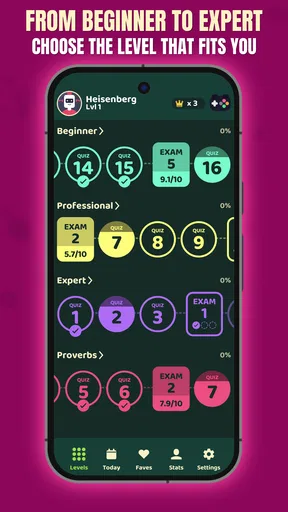
The game’s Everyone age rating makes it suitable for a broad audience, including younger learners who are ready to work with basic English sentences. I would still expect a parent or teacher to decide whether the level matches the child, because an age rating does not tell me whether the exercises are beginner, intermediate, or advanced. For an adult learner, the simple presentation can be reassuring, although someone already comfortable with English grammar may find the early practice too easy.
Its rating of 4.3 from around 475 ratings suggests that many users find the experience worthwhile, but I would not use that figure as a substitute for judging fit. A grammar game can be well liked and still be wrong for a learner who needs speaking practice or detailed explanations. In my view, the positive response makes sense for people who enjoy short, focused exercises, not necessarily for everyone studying English.
Worth Reading Before You Choose

EA SPORTS FC Mobile 26 Is a Bigger Football Game, but It Takes Time

Flipboard Shows What News Apps Must Do Beyond the Feed

Switching to Android Auto Means Rethinking Your Driving Routine

Google Calendar Makes a Crowded Week Easier to Manage

Ludo King Makes the Most of the Minutes Between Plans

Baby Panda World Brings Quick Play to Modern Phones, but Its Game Library Feels Busy
A practical first-week routine
During the first week, I would avoid rushing through as many exercises as possible. A better routine is to play for a few minutes, read every completed sentence aloud, and write down the prepositions that caused hesitation. The speaking step matters because it connects the visual arrangement with a sentence I might actually say. The writing step turns a fleeting mistake into something I can revisit later.
One useful trick is to group mistakes by meaning rather than by individual word. For example, I might collect sentences about location, time, movement, or possession. This helps me see that a preposition is not just a tiny answer to memorize; it expresses a relationship inside the sentence. The game provides the prompt, but I have to supply the reflection if I want the exercise to become lasting knowledge.
I would also play with a notebook or notes app nearby, especially if I am studying for school or preparing for travel. When an exercise feels confusing, I can copy the whole sentence instead of recording only the correct word. Later, I can create a similar sentence from my own life. “The keys are on the table” is more memorable when it connects to something I actually see than when it remains an isolated game prompt.
The price is $6.49, so I would make that decision based on intended use rather than novelty. If I expect to open it repeatedly for targeted grammar practice, the cost may be reasonable. If I only want to try a few language games, I would think more carefully before buying, because the subject matter is deliberately limited. The first week can be enjoyable, but enjoyment alone does not guarantee that it will earn a permanent place on my device.
What remains useful after the novelty fades
The long-term question is whether arranging prepositions continues to help after the first burst of curiosity. For me, the answer depends on how actively I use the exercises. If I simply tap through familiar patterns, the game can become routine without producing much improvement. If I treat each sentence as a small correction lesson, it has more staying power.
That distinction is important with any narrow grammar game. Recognition is easier than production. I may correctly identify the right preposition when the choices are in front of me, yet hesitate when speaking or writing without help. To close that gap, I would follow a game session by creating three original sentences using the same relationship. This turns a recognition exercise into a short production drill and gives the practice a better chance of transferring to everyday English.
A second effective workflow is to use the game as a warm-up before another activity. I might complete a few exercises before reading an article, writing an email, or joining an English conversation group. The game gets my attention onto sentence structure, while the following activity tests whether I can use that awareness in a less controlled setting. On its own, the app is limited; placed before real language use, it becomes more useful.
It can also serve as a diagnostic tool. If I repeatedly miss a certain kind of preposition, I know where to direct further study. I might then look for examples in a grammar reference, underline similar constructions in a book, and listen for them in videos or conversation. The game does not need to teach every explanation itself to be helpful. It can reveal the areas where my intuition is unreliable.
For teachers and parents, the short exercise format could fit into a larger learning plan. A learner might use it at the beginning of a lesson, then explain the completed sentences aloud. The important part is not presenting the game as proof of mastery. It works better as a prompt for discussion: What does the preposition express? Would another choice change the meaning? Can the learner make a new example?
The current version is 2.1, and the game was released on Aug 5, 2017. Those details place it in a different era from newer language apps built around constant reminders, social competition, multimedia lessons, and broad skill trees. That is not automatically a weakness. The simpler focus may be exactly what someone wants when modern language platforms feel crowded. Still, learners expecting a full contemporary course experience should approach it with modest expectations.
Who gets recurring value from it
I see the best recurring value for beginners who keep making the same preposition mistakes, students looking for extra grammar drills, and adults who want a quiet practice activity without committing to a long lesson. It may also help learners returning to English after a break, because sentence arrangement offers a gentle way to reactivate familiar structures.
It is less suitable for someone whose main goal is conversation. Nothing about placing words in a sentence can replace the uncertainty of responding to another person in real time. It is also not the best single choice for a learner who needs pronunciation feedback, listening comprehension, extensive vocabulary, or writing correction. A broader language platform, a tutor, or direct conversation practice would serve those needs better.
Advanced learners may still use it occasionally as a quick refresher, but I would not expect it to challenge them consistently. Once the patterns become automatic, the exercises may stop revealing new problems. At that point, reading authentic material and writing longer passages would probably create more useful difficulty. The app’s strength is focused repetition, and focused repetition has diminishing returns when the target skill is already secure.
The maintenance burden is small, but the learner must do the work
One attractive quality is the low setup burden. I do not need to prepare a study plan before opening it, and a short session does not require a large block of free time. That makes it easier to maintain than a course I repeatedly postpone because it feels too demanding. For a busy learner, a small grammar habit can be more realistic than an ambitious schedule that disappears after a few days.
However, the app does not remove the need for maintenance. I still have to remember to return, notice patterns, and connect the exercises with real English. Without that extra effort, I may become good at the game’s immediate task rather than better at using prepositions naturally. I would set a modest recurring goal, such as a few sessions each week, and review my notes at the end of the week. The goal should be consistency, not exhausting repetition.
I would also vary the follow-up activity. On one day, I might read the completed sentences aloud. On another, I might write a short paragraph containing several location or time expressions. On another, I might search my own messages or notes for prepositions I use uncertainly and compare them with examples from the game. This variation prevents the practice from becoming a mechanical tapping habit.
Another maintenance tip is to stop a session when attention drops. Grammar practice becomes less useful when I am guessing simply to finish. Because the exercises are compact, there is little benefit in forcing a long session. I would rather complete a small number carefully, investigate the mistakes, and return later than create a high-volume routine with no reflection.
The app’s 50K+ installs show that it has reached a meaningful audience, while its 10 reviews indicate a much smaller visible written-review base than the install figure. I would read that as evidence of availability and interest, not proof that it will match every learner’s needs. The more relevant question is whether I have a recurring problem with English prepositions that this focused format can address.
Where fatigue can set in
The main risk is repetition without enough context. Prepositions are easier to remember when they appear in meaningful situations, but sentence games can eventually feel detached from the way people actually communicate. If I use the app for too long without reading, speaking, or writing elsewhere, I may recognize correct answers while remaining hesitant in conversation.
A second source of fatigue is the limited subject area. At first, the narrow focus feels refreshing because it avoids distractions. After repeated sessions, that same focus can feel restrictive. Learners who want a sense of progress across grammar, vocabulary, listening, and speaking may prefer a broader alternative. I would not criticize this game for refusing to be a complete course; I would simply avoid buying it with that expectation.
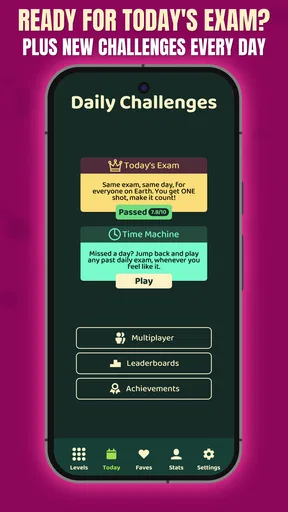
There is also a motivational trade-off. More elaborate language apps often use streaks, levels, stories, or social features to encourage daily returns. A focused grammar game may be calmer, but it may not provide the same external push. If I need visible milestones to maintain a habit, I would pair this with a study tracker or use it alongside a course that supplies a wider progression.
Some learners may find the price difficult to justify if they already have grammar books, classroom materials, or a favorite language app covering prepositions. In that situation, the game’s convenience has to outweigh the overlap. I would choose it when the interactive format helps me practice more consistently than static exercises. If I already complete workbook drills reliably, the extra purchase may add less value.
The game can also expose a difference between knowing a rule and understanding usage. English prepositions often depend on fixed expressions, context, and convention, not only on a simple rule. When I encounter a sentence that seems arbitrary, I would avoid inventing an explanation just to make the answer feel tidy. I would record the expression as a useful pattern and consult a reliable reference if the distinction matters. That approach is more honest and more effective than assuming every answer can be reduced to one universal formula.
My long-term verdict
After the novelty fades, I think this game earns space on a learner’s device only when it is used for a specific purpose. Its lasting value comes from being a convenient way to revisit prepositions, identify recurring errors, and prepare for more demanding English practice. It does not earn that space by offering a complete learning journey, and I would be disappointed if I expected it to replace a course or conversation.
For a beginner who wants a friendly entry point into grammar, the Everyone rating, simple sentence focus, and short-session format make it approachable. For a learner with a persistent weakness in prepositions, the $6.49 price can be reasonable if the app becomes part of a regular routine. I would use it in small doses, keep examples of my mistakes, and turn completed exercises into original sentences.
I would skip it if my priority is speaking fluently, expanding vocabulary quickly, improving pronunciation, or receiving detailed explanations of every grammar choice. A tutor, a structured course, or a broader language app would be a better main resource in those cases. I would also skip it if I know I will play only during the first week and then abandon it; a narrow tool needs repeated use to justify its place.
My recommendation is therefore specific rather than universal: choose it as a focused grammar companion, not as your entire English plan. Gamiak has built something that can make a small but troublesome part of English feel approachable. The lasting benefit depends on what I do after each exercise. If I connect the game’s sentences to reading, writing, and real speech, it can support a durable habit. If I only chase correct taps, the appeal is likely to fade well before the grammar becomes natural.
Pros
- Short grammar games make practice feel less repetitive.
- Covers useful topics such as tenses
- articles
- and prepositions.
- Quick exercises fit easily into short daily study sessions.
- Immediate answers help identify mistakes while practicing.
- Suitable for learners who prefer independent study at their own pace.
Cons
- Some exercises may feel too basic for advanced English learners.
- Repeated question formats can become monotonous over time.
- Explanations may not provide enough detail for difficult grammar rules.
- Progress tracking may be limited compared with full language courses.
- Requires regular self-discipline because there is no live teacher support.
FAQs for Learn English w/ Grammar Games
What is Learn English w/ Grammar Games?
Learn English w/ Grammar Games is an educational app designed to help users improve their English grammar through short, interactive exercises and game-like challenges. Instead of relying only on traditional lessons, it uses quizzes, progress-based activities, and repeated practice to make grammar topics easier to understand. It may be useful for beginners, students, travelers, and anyone who wants to review English at their own pace.
Which English grammar topics can I study in the app?
The app generally focuses on practical grammar areas that English learners frequently need, such as verb tenses, articles, prepositions, pronouns, sentence structure, adjectives, adverbs, and common usage mistakes. The exact selection and difficulty can vary by version, but the game format is intended to let you practice one topic at a time. This makes it easier to identify weak areas and repeat exercises until your answers become more consistent.
Is Learn English w/ Grammar Games suitable for beginners?
Yes, the app can be suitable for beginners because its activities are divided into short questions rather than long, complicated lessons. New learners can use it to become familiar with basic grammar rules and everyday sentence patterns, while intermediate users may benefit from reviewing common mistakes. However, it should be considered a practice tool rather than a complete English course, especially if you also need speaking, listening, or writing instruction.
Does the app work offline, and is it free to use?
Availability of offline access and pricing may depend on the app version, device, and the developer’s current settings. Some grammar games and previously loaded exercises may work without a constant internet connection, while advertisements, updates, analytics, or optional features can require connectivity. Before downloading, check the Google Play Store or Apple App Store listing for current in-app purchases, subscription details, advertising information, and any limitations applied to the free version.
Can Learn English w/ Grammar Games replace English classes or a grammar book?
The app is best used as a convenient supplement rather than a complete replacement for classes, tutoring, or a detailed grammar reference. Its interactive questions can help you memorize rules, recognize correct sentence patterns, and maintain a regular study routine. Nevertheless, serious learners should combine it with reading, listening, conversation practice, and written exercises. If an explanation seems unclear, consult a reliable grammar source instead of relying only on the game’s answer feedback.


